Three-way plug valve: Structure, working principle and industrial applications
09 Sep, 2026
I. Introduction
The three-way plug valve is a 90-degree rotary valve. This valve has a valve core with a flow channel, which can control the diversion, mixing and on/off of the fluid in the pipeline. Ordinary two-way valves can only perform simple on/off operations of the pipeline. The three-way plug valve can independently complete the multi-directional switching of the fluid. It can simplify the pipeline layout, reduce the number of supporting equipment, and lower the construction cost of the project. This valve is small in size and runs stably. It can be used in multiple industrial fields such as petrochemicals, oil and gas, energy, water treatment, pharmaceuticals, etc., and is a commonly used fluid control equipment in industrial production.
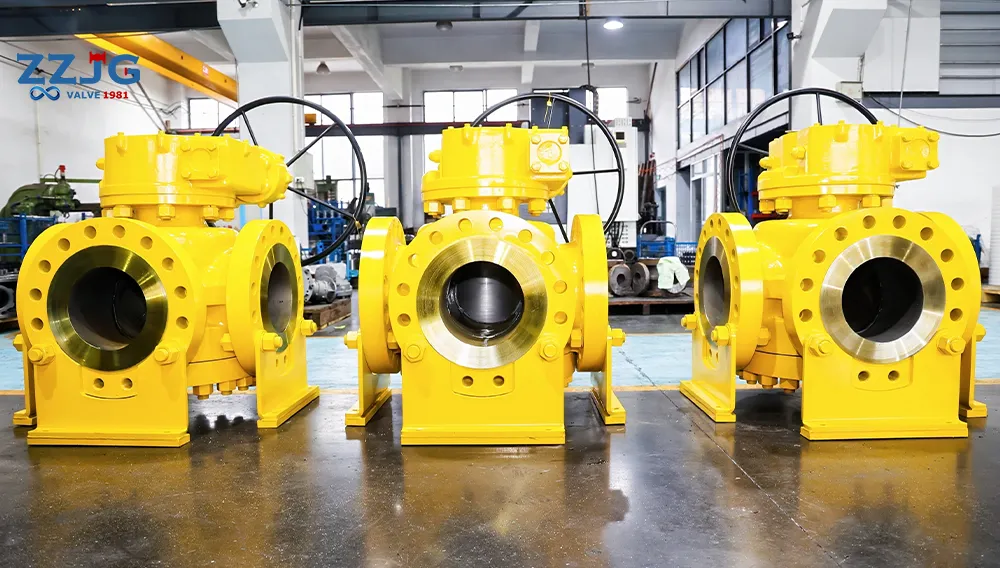
II. Basic structure
The three-way plug valve mainly consists of the valve body, valve core, valve stem, sealing sleeve, packing ring and actuator. These components all play a key role in the operation of the valve.
III. Working principle
When the valve operates, the staff rotates the valve core, causing the valve core to rotate 90 degrees around the valve stem. The flow channels inside the valve core will align or misalign with the interface of the valve body, thereby changing the flow direction of the fluid and achieving different control effects.
Compared with the ordinary ball valve, the valve core and valve seat of the three-way plug valve adopt a cylindrical contact surface. Its sealing area is larger, and it is less likely to be blocked by viscous, fiber-containing, or slightly impure fluid. This valve adopts a non-lubricated sleeve structure, and there will be no contamination of the medium by grease. It is suitable for industries with high cleanliness requirements such as food processing, drinking water transportation, and fine chemical production.
IV. Main features and advantages
1. Compact structure, saving space: One three-way plug valve can replace two ordinary two-way valves. It can shorten the overall length of the pipeline, reduce the number
of flange connection points, and effectively reduce the risk of pipeline leakage.
2.Simple operation, quick switching: The valve only needs to rotate 90 degrees to complete the on/off and flow direction switching of the fluid. The equipment response speed is fast, suitable for emergency cutoff and rapid diversion work scenarios.
4.Low fluid resistance: The internal flow channel of the valve is a straight-through type, and the pressure loss during the fluid passage is very small, which can be adapted to large-flow pipeline circulation systems.
5.Easy Maintenance: Most three-way plug valves adopt a top-mounted disassembly structure. Workers do not need to remove the entire valve from the pipeline to inspect or replace the internal sealing components, effectively reducing the downtime for equipment maintenance.
V. Typical Industrial Applications
1. Petrochemical and Refining Industry: Valves are mainly used to switch the medium in reaction vessels, switch the circulation of production pipelines, and mix and blend oil products.
5.Power Generation Industry: Valves are mainly used in auxiliary fluid systems of power stations, responsible for coolant switching, medium sampling control, etc.
VI. Selection Guide
When workers select three-way plug valves, they need to confirm several key parameters. Workers first need to determine the interface type of the valve, which is either L-type or T-type. Workers also need to confirm the nominal pressure of the equipment, working temperature, corrosion characteristics of the transported medium, sealing grade, and operation mode. The operation mode of the valve is divided into manual, pneumatic, and electric types.
If the medium transported by the pipeline contains impurities or has a viscous texture, workers can choose valve cores with lubrication and self-cleaning structures. When the production process requires high safety standards, workers can choose valves with fireproof and anti-static configurations to make the equipment comply with industry general standards such as API 6D.
The three-way plug valve is a 90-degree rotary valve. This valve has a valve core with a flow channel, which can control the diversion, mixing and on/off of the fluid in the pipeline. Ordinary two-way valves can only perform simple on/off operations of the pipeline. The three-way plug valve can independently complete the multi-directional switching of the fluid. It can simplify the pipeline layout, reduce the number of supporting equipment, and lower the construction cost of the project. This valve is small in size and runs stably. It can be used in multiple industrial fields such as petrochemicals, oil and gas, energy, water treatment, pharmaceuticals, etc., and is a commonly used fluid control equipment in industrial production.
II. Basic structure
The three-way plug valve mainly consists of the valve body, valve core, valve stem, sealing sleeve, packing ring and actuator. These components all play a key role in the operation of the valve.
1.Valve body: The valve body is the main structure that bears pressure of the valve. The valve body has three medium interfaces, mainly divided into L-shaped and T-shaped structures, which can adapt to different production processes. The commonly used materials for the valve body include cast iron, carbon steel, stainless steel, and alloy steel. These materials can be adapted to special medium transportation scenarios with corrosion, high temperature, etc.
2.Valve core: The valve core is the core rotating component of the valve. Its interior is reserved with flow channels. The L-shaped valve core is mainly used to switch the flow direction between two sets of interfaces. The T-shaped valve core has more functions. It can complete the flow mixing, flow diversion, and pipeline cutoff three tasks.
3.Sealing components: The valve is equipped with PTFE and RPTFE soft sealing sleeves. This sealing structure can achieve complete sealing and zero leakage for the pipeline transporting low-pressure clean media. In harsh working environments such as high temperature, high pressure, and abrasion, metal sealing structures are used to ensure the stable operation of the valve.
2.Valve core: The valve core is the core rotating component of the valve. Its interior is reserved with flow channels. The L-shaped valve core is mainly used to switch the flow direction between two sets of interfaces. The T-shaped valve core has more functions. It can complete the flow mixing, flow diversion, and pipeline cutoff three tasks.
3.Sealing components: The valve is equipped with PTFE and RPTFE soft sealing sleeves. This sealing structure can achieve complete sealing and zero leakage for the pipeline transporting low-pressure clean media. In harsh working environments such as high temperature, high pressure, and abrasion, metal sealing structures are used to ensure the stable operation of the valve.
III. Working principle
When the valve operates, the staff rotates the valve core, causing the valve core to rotate 90 degrees around the valve stem. The flow channels inside the valve core will align or misalign with the interface of the valve body, thereby changing the flow direction of the fluid and achieving different control effects.
1.L-shaped interface valve: This valve can form two independent fluid channels. After the staff rotates the valve handle, the fluid in the pipeline can flow from the inlet to any outlet. This valve is suitable for simple fluid diversion and pipeline switching work.
2.T-shaped interface valve: This valve has three operating modes, namely fluid diversion, fluid mixing, and complete pipeline cutoff. Two streams of fluid can be converged to the same pipeline, and a single stream of fluid can also be divided into two streams for transportation. It can meet the complex process requirements such as material ratio and pipeline circulation switching in industrial production.
2.T-shaped interface valve: This valve has three operating modes, namely fluid diversion, fluid mixing, and complete pipeline cutoff. Two streams of fluid can be converged to the same pipeline, and a single stream of fluid can also be divided into two streams for transportation. It can meet the complex process requirements such as material ratio and pipeline circulation switching in industrial production.
Compared with the ordinary ball valve, the valve core and valve seat of the three-way plug valve adopt a cylindrical contact surface. Its sealing area is larger, and it is less likely to be blocked by viscous, fiber-containing, or slightly impure fluid. This valve adopts a non-lubricated sleeve structure, and there will be no contamination of the medium by grease. It is suitable for industries with high cleanliness requirements such as food processing, drinking water transportation, and fine chemical production.
IV. Main features and advantages
1. Compact structure, saving space: One three-way plug valve can replace two ordinary two-way valves. It can shorten the overall length of the pipeline, reduce the number
of flange connection points, and effectively reduce the risk of pipeline leakage.
2.Simple operation, quick switching: The valve only needs to rotate 90 degrees to complete the on/off and flow direction switching of the fluid. The equipment response speed is fast, suitable for emergency cutoff and rapid diversion work scenarios.
3.Good sealing effect: The elastic sealing sleeve structure can achieve zero leakage under the rated working pressure. The metal sealing style can adapt to extreme high-temperature and high-pressure working environments and has a wider application range.
4.Low fluid resistance: The internal flow channel of the valve is a straight-through type, and the pressure loss during the fluid passage is very small, which can be adapted to large-flow pipeline circulation systems.
5.Easy Maintenance: Most three-way plug valves adopt a top-mounted disassembly structure. Workers do not need to remove the entire valve from the pipeline to inspect or replace the internal sealing components, effectively reducing the downtime for equipment maintenance.
V. Typical Industrial Applications
1. Petrochemical and Refining Industry: Valves are mainly used to switch the medium in reaction vessels, switch the circulation of production pipelines, and mix and blend oil products.
2.Oil and Gas Industry: Valves are widely used in onshore and offshore oil and gas equipment, mainly controlling the diversion and transmission of crude oil, natural gas, and produced water.
3.Water Treatment and HVAC Industry: Valves mainly complete the pipe switching for mixing cold and hot water and pipeline backwashing.
4.Food and Pharmaceutical Industry: Hygienic three-way plug valves use non-toxic sealing materials and can safely complete the mixing and transportation of sterile liquids.
3.Water Treatment and HVAC Industry: Valves mainly complete the pipe switching for mixing cold and hot water and pipeline backwashing.
4.Food and Pharmaceutical Industry: Hygienic three-way plug valves use non-toxic sealing materials and can safely complete the mixing and transportation of sterile liquids.
5.Power Generation Industry: Valves are mainly used in auxiliary fluid systems of power stations, responsible for coolant switching, medium sampling control, etc.
VI. Selection Guide
When workers select three-way plug valves, they need to confirm several key parameters. Workers first need to determine the interface type of the valve, which is either L-type or T-type. Workers also need to confirm the nominal pressure of the equipment, working temperature, corrosion characteristics of the transported medium, sealing grade, and operation mode. The operation mode of the valve is divided into manual, pneumatic, and electric types.
If the medium transported by the pipeline contains impurities or has a viscous texture, workers can choose valve cores with lubrication and self-cleaning structures. When the production process requires high safety standards, workers can choose valves with fireproof and anti-static configurations to make the equipment comply with industry general standards such as API 6D.
Previous: 10Inch 150LB WCB DBB Plug Valve Manufacturer | ZZJG VALVE
Recent News
- How To Handle Stuffing Box Leakage In a Plug Valve?
- Three-way plug valve: Structure, working principle and industrial applications
- 10Inch 150LB WCB DBB Plug Valve Manufacturer | ZZJG VALVE
- High‑Performance DBB Plug Valve for Dual Isolation & Pressure Relief
- ZZJG VALVE Launches New Full Bore Sleeve Plug Valve for Industrial Pipelines
- Plug Valve: Principles, Types, Advantages and Applications