How To Handle Stuffing Box Leakage In a Plug Valve?
14 Sep, 2026
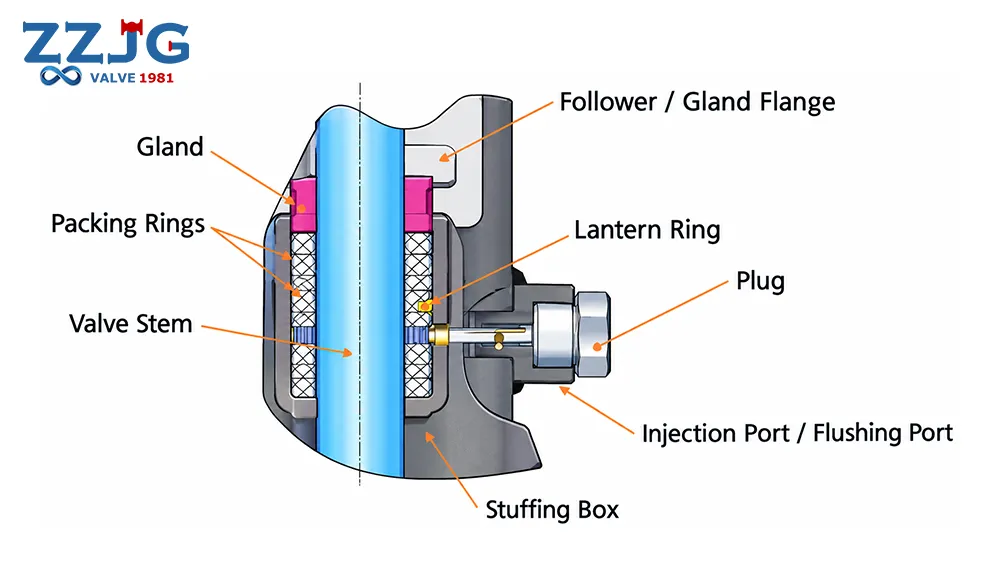
In industrial pipelines such as petroleum, chemical, and heating industries, plug valves are frequently used for media shut-off and control. Stuffing box leakage at the valve stem is a common problem in the field. Workers can usually see liquid seeping between the valve stem and the valve body, or find gas leaking from the stuffing box.
For minor stuffing box leakage, workers usually do not need to remove the valve; they can first check and adjust the packing gland. However, before operation, workers need to confirm that the site conditions are safe, especially the internal pressure, medium, and temperature of the valve.
I. What Needs To Be Checked Before Operation?
1. Check the Medium and Pressure
Workers first need to confirm the medium inside the valve. If the valve is conveying highly toxic, corrosive, flammable, or explosive media, or high-temperature, high-pressure steam, personnel cannot directly perform simple on-site handling. For these hazardous media, personnel must operate according to on-site safety requirements and use appropriate protective equipment.
Personnel also need to check the internal pressure of the valve. The lower the pressure, the safer the on-site operation. The specific pressure range needs to be determined based on the valve structure, packing material, and on-site conditions; it cannot be judged solely based on a fixed pressure value.
2. Check Valve Position
Personnel need to confirm that the plug valve is in the fully open or fully closed position. When on-site conditions permit, personnel can usually place the valve in the fully open position. Personnel must not arbitrarily tighten the packing when the valve is half-open, because if the packing is too tight, the rotational resistance of the valve stem and plug will increase, and in severe cases, it may cause the valve to jam.
3. Check the On-site Environment
Before operation, personnel need to check the surrounding environment and confirm that there are no obvious hazards. Personnel also need to ensure that escape routes are unobstructed, and it is best to have personnel on-site to monitor the situation. If the leakage suddenly increases, the monitoring personnel can promptly alert and assist in handling the situation.
II. How to Handle Minor Leaks?
Method 1: Adjusting the Packing Gland
If only a small amount of liquid or gas is seeping from the valve stem, the operator should first check the packing gland. In many cases, the packing has simply loosened after prolonged use; readjusting the gland can reduce or stop the leakage.
The operator can slowly tighten the packing gland nut with a wrench. Double nuts need to be adjusted alternately, and four nuts need to be adjusted symmetrically. The operator can tighten it about 1/4 turn each time, then observe for 5-10 minutes. If the leakage stops, the operator can stop adjusting. If there is still a small amount of leakage, the operator can tighten it another about 1/8 turn.
The operator should not tighten the nut too much at once. If the gland is already close to the bottom but the valve is still leaking, the operator should not continue to tighten it. If the operator finds that the valve stem turns noticeably harder, the adjustment should also be stopped, as this may indicate that the packing is no longer sealing properly and needs to be replaced with new packing.
III. How to Handle Packing Failure?
Method Two: Replacing the Packing
If the original packing has hardened, worn, or lost its elasticity, simply adjusting the gland may not be effective. In this case, the operator needs to consider replacing the packing. The operator needs to prepare packing removal tools, new packing, a wrench, and necessary protective equipment in advance.
Common packing materials include graphite and PTFE. The operator needs to select the appropriate material and specifications based on the original packing, valve structure, and operating conditions. If the new packing is not of the correct specifications, leakage may continue even after installation.
1. Reduce Valve Pressure First
If there are shut-off valves before and after the valve, the operator can first close the relevant valves and confirm that the valve internal pressure has been released. If the operator cannot completely isolate the valve, they cannot directly replace the packing under pressure.
For high-pressure, flammable, toxic, and high-temperature media, the operator needs to handle them according to on-site safety requirements. Ordinary personnel cannot directly replace the packing under pressure.
2. Loosen the Packing Gland
The operator needs to slowly loosen the gland nut, but cannot remove the nut completely at once. After loosening the gland, personnel need to observe the site conditions and confirm that there will be no sudden leakage of media.
If personnel find that the pressure has not been fully released, or if there is an obvious hazard at the site, operation must be stopped.
3. Removing the Old Packing
Personnel can use special tools to carefully remove the old packing. Personnel need to avoid scratching the valve stem and the inner wall of the stuffing box, as scratches on the valve stem surface or the inner wall of the stuffing box may prevent the new packing from sealing properly.
After removing the old packing, personnel also need to inspect the valve stem surface. If the valve stem has obvious corrosion, grooves, or bending, personnel cannot simply replace the packing; further inspection of the valve is required.
4. Installing the New Packing
Personnel need to select suitable new packing and install it according to the packing specifications. Packing can be cut to a suitable length, and the cut can generally be made at approximately 45°. When installing each ring of packing, personnel need to stagger the cuts of adjacent packing rings to reduce leakage channels.
Personnel need to install and compact the packing ring by ring, ensuring that the packing is evenly distributed within the stuffing box. No obvious gaps should be left inside the packing; otherwise, leakage may still occur after the valve is operational.
5. Tightening and Inspecting the Packing
After the new packing is installed, the operator needs to return the gland to its original position and tighten the gland nuts symmetrically. The operator should not tighten one side of the nuts too much at once; the gland needs to remain stable.
After adjustment, the operator needs to slowly restore the pressure and check for leakage at the valve stem. If there is no obvious leakage, the operator also needs to check if the valve can open and close normally. If the valve stem becomes noticeably heavier to turn, the operator needs to stop tightening.
IV. What Precautions Should Be Taken When Handling Under Pressure?
Some sites use sealants to treat minor leaks in the stuffing box. This method requires specialized equipment and correct operating procedures and should not be treated as a regular maintenance method.
Ordinary personnel should not directly replace the packing under pressure. For flammable, toxic, high-temperature, or high-pressure media, personnel must handle the situation according to equipment requirements and on-site safety regulations.
V. On-Site Handling Can Be Carried Out In This Order:
First, the operator needs to check the valve pressure and internal medium, and then confirm that the valve is in the fully open or fully closed position. If the leakage is minor, the operator can first adjust the packing gland and observe the leakage.
If the leakage persists after adjusting the gland, the operator needs to check if the packing is damaged. If the packing is aged or worn, the operator needs to replace it with new packing under safe conditions. After installing the new packing, the operator needs to symmetrically tighten the gland and slowly restore the pressure, finally checking if the valve still leaks.
VI. When Should Operation Be Stopped?
If there is obvious liquid or gas jetting at the stuffing box, the operator needs to stop operation immediately. If the valve stem surface has severe corrosion, obvious grooves, or bending, the operator should not continue with simple packing adjustments.
If the valve is conveying high-temperature steam, highly toxic media, or other hazardous media, the operator needs to handle it according to professional maintenance methods. If the leakage worsens after adjusting the packing, or if serious leakage persists after replacing the packing, the operator needs to stop operation and further inspect the valve stem, stuffing box, and valve sealing components.
VII. Why Should Stuffing Box Leaks Be Addressed Promptly?
The packing is primarily responsible for sealing the valve stem. For plug valves, the sealing also depends on the fit between the plug and the valve body. If the packing leaks for an extended period, the leaking medium may corrode the valve stem and stuffing box. In severe cases, the valve stem may be damaged, and the valve may become inoperable.
Therefore, if a leak is discovered in the stuffing box, it needs to be checked and addressed promptly. Even small leaks should not be ignored for long, as they may gradually increase and affect the normal operation of the valve.
If you want to learn more about plug vavle, contact ZZJG VALVE.
For minor stuffing box leakage, workers usually do not need to remove the valve; they can first check and adjust the packing gland. However, before operation, workers need to confirm that the site conditions are safe, especially the internal pressure, medium, and temperature of the valve.
I. What Needs To Be Checked Before Operation?
1. Check the Medium and Pressure
Workers first need to confirm the medium inside the valve. If the valve is conveying highly toxic, corrosive, flammable, or explosive media, or high-temperature, high-pressure steam, personnel cannot directly perform simple on-site handling. For these hazardous media, personnel must operate according to on-site safety requirements and use appropriate protective equipment.
Personnel also need to check the internal pressure of the valve. The lower the pressure, the safer the on-site operation. The specific pressure range needs to be determined based on the valve structure, packing material, and on-site conditions; it cannot be judged solely based on a fixed pressure value.
2. Check Valve Position
Personnel need to confirm that the plug valve is in the fully open or fully closed position. When on-site conditions permit, personnel can usually place the valve in the fully open position. Personnel must not arbitrarily tighten the packing when the valve is half-open, because if the packing is too tight, the rotational resistance of the valve stem and plug will increase, and in severe cases, it may cause the valve to jam.
3. Check the On-site Environment
Before operation, personnel need to check the surrounding environment and confirm that there are no obvious hazards. Personnel also need to ensure that escape routes are unobstructed, and it is best to have personnel on-site to monitor the situation. If the leakage suddenly increases, the monitoring personnel can promptly alert and assist in handling the situation.
II. How to Handle Minor Leaks?
Method 1: Adjusting the Packing Gland
If only a small amount of liquid or gas is seeping from the valve stem, the operator should first check the packing gland. In many cases, the packing has simply loosened after prolonged use; readjusting the gland can reduce or stop the leakage.
The operator can slowly tighten the packing gland nut with a wrench. Double nuts need to be adjusted alternately, and four nuts need to be adjusted symmetrically. The operator can tighten it about 1/4 turn each time, then observe for 5-10 minutes. If the leakage stops, the operator can stop adjusting. If there is still a small amount of leakage, the operator can tighten it another about 1/8 turn.
The operator should not tighten the nut too much at once. If the gland is already close to the bottom but the valve is still leaking, the operator should not continue to tighten it. If the operator finds that the valve stem turns noticeably harder, the adjustment should also be stopped, as this may indicate that the packing is no longer sealing properly and needs to be replaced with new packing.
III. How to Handle Packing Failure?
Method Two: Replacing the Packing
If the original packing has hardened, worn, or lost its elasticity, simply adjusting the gland may not be effective. In this case, the operator needs to consider replacing the packing. The operator needs to prepare packing removal tools, new packing, a wrench, and necessary protective equipment in advance.
Common packing materials include graphite and PTFE. The operator needs to select the appropriate material and specifications based on the original packing, valve structure, and operating conditions. If the new packing is not of the correct specifications, leakage may continue even after installation.
1. Reduce Valve Pressure First
If there are shut-off valves before and after the valve, the operator can first close the relevant valves and confirm that the valve internal pressure has been released. If the operator cannot completely isolate the valve, they cannot directly replace the packing under pressure.
For high-pressure, flammable, toxic, and high-temperature media, the operator needs to handle them according to on-site safety requirements. Ordinary personnel cannot directly replace the packing under pressure.
2. Loosen the Packing Gland
The operator needs to slowly loosen the gland nut, but cannot remove the nut completely at once. After loosening the gland, personnel need to observe the site conditions and confirm that there will be no sudden leakage of media.
If personnel find that the pressure has not been fully released, or if there is an obvious hazard at the site, operation must be stopped.
3. Removing the Old Packing
Personnel can use special tools to carefully remove the old packing. Personnel need to avoid scratching the valve stem and the inner wall of the stuffing box, as scratches on the valve stem surface or the inner wall of the stuffing box may prevent the new packing from sealing properly.
After removing the old packing, personnel also need to inspect the valve stem surface. If the valve stem has obvious corrosion, grooves, or bending, personnel cannot simply replace the packing; further inspection of the valve is required.
4. Installing the New Packing
Personnel need to select suitable new packing and install it according to the packing specifications. Packing can be cut to a suitable length, and the cut can generally be made at approximately 45°. When installing each ring of packing, personnel need to stagger the cuts of adjacent packing rings to reduce leakage channels.
Personnel need to install and compact the packing ring by ring, ensuring that the packing is evenly distributed within the stuffing box. No obvious gaps should be left inside the packing; otherwise, leakage may still occur after the valve is operational.
5. Tightening and Inspecting the Packing
After the new packing is installed, the operator needs to return the gland to its original position and tighten the gland nuts symmetrically. The operator should not tighten one side of the nuts too much at once; the gland needs to remain stable.
After adjustment, the operator needs to slowly restore the pressure and check for leakage at the valve stem. If there is no obvious leakage, the operator also needs to check if the valve can open and close normally. If the valve stem becomes noticeably heavier to turn, the operator needs to stop tightening.
IV. What Precautions Should Be Taken When Handling Under Pressure?
Some sites use sealants to treat minor leaks in the stuffing box. This method requires specialized equipment and correct operating procedures and should not be treated as a regular maintenance method.
Ordinary personnel should not directly replace the packing under pressure. For flammable, toxic, high-temperature, or high-pressure media, personnel must handle the situation according to equipment requirements and on-site safety regulations.
V. On-Site Handling Can Be Carried Out In This Order:
First, the operator needs to check the valve pressure and internal medium, and then confirm that the valve is in the fully open or fully closed position. If the leakage is minor, the operator can first adjust the packing gland and observe the leakage.
If the leakage persists after adjusting the gland, the operator needs to check if the packing is damaged. If the packing is aged or worn, the operator needs to replace it with new packing under safe conditions. After installing the new packing, the operator needs to symmetrically tighten the gland and slowly restore the pressure, finally checking if the valve still leaks.
VI. When Should Operation Be Stopped?
If there is obvious liquid or gas jetting at the stuffing box, the operator needs to stop operation immediately. If the valve stem surface has severe corrosion, obvious grooves, or bending, the operator should not continue with simple packing adjustments.
If the valve is conveying high-temperature steam, highly toxic media, or other hazardous media, the operator needs to handle it according to professional maintenance methods. If the leakage worsens after adjusting the packing, or if serious leakage persists after replacing the packing, the operator needs to stop operation and further inspect the valve stem, stuffing box, and valve sealing components.
VII. Why Should Stuffing Box Leaks Be Addressed Promptly?
The packing is primarily responsible for sealing the valve stem. For plug valves, the sealing also depends on the fit between the plug and the valve body. If the packing leaks for an extended period, the leaking medium may corrode the valve stem and stuffing box. In severe cases, the valve stem may be damaged, and the valve may become inoperable.
Therefore, if a leak is discovered in the stuffing box, it needs to be checked and addressed promptly. Even small leaks should not be ignored for long, as they may gradually increase and affect the normal operation of the valve.
If you want to learn more about plug vavle, contact ZZJG VALVE.
Previous: Three-way plug valve: Structure, working principle and industrial applications
Next: Back to list
Recent News
- How To Handle Stuffing Box Leakage In a Plug Valve?
- Three-way plug valve: Structure, working principle and industrial applications
- 10Inch 150LB WCB DBB Plug Valve Manufacturer | ZZJG VALVE
- High‑Performance DBB Plug Valve for Dual Isolation & Pressure Relief
- ZZJG VALVE Launches New Full Bore Sleeve Plug Valve for Industrial Pipelines
- Plug Valve: Principles, Types, Advantages and Applications